B2B vs B2C Lead Generation: Key Differences Explained
Explore the key differences between B2B and B2C lead generation, including target audiences, sales cycles, decision-making processes, and marketing channels.
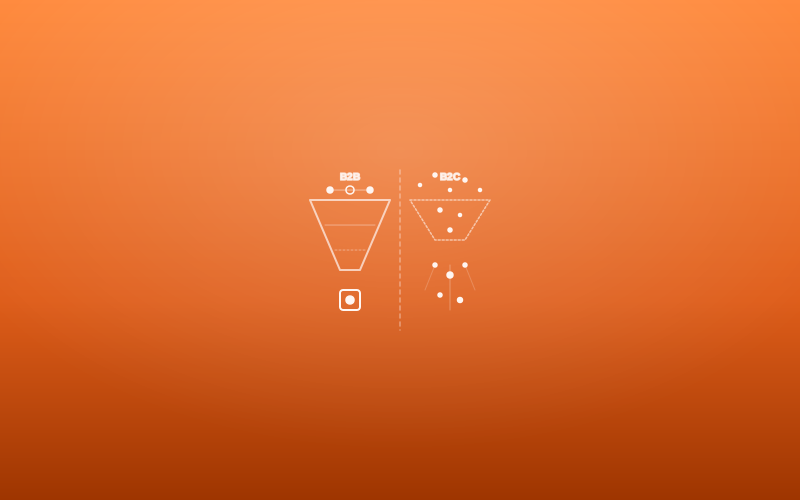
B2B vs B2C Lead Generation
Lead generation is the process of attracting potential customers and converting them into prospects interested in a product or service. However, the strategy used to generate leads differs significantly depending on whether a business sells to other businesses (B2B) or individual consumers (B2C).
B2B lead generation focuses on longer sales cycles, relationship building, and high-value deals, while B2C lead generation typically targets high-volume customers with shorter buying decisions.
Quick Answer: B2B vs B2C Lead Generation
B2B lead generation targets businesses or organizations as customers, while B2C lead generation targets individual consumers.
| Factor | B2B Lead Generation | B2C Lead Generation |
|---|---|---|
| Target audience | Businesses, decision-makers | Individual consumers |
| Sales cycle | Long (weeks to months) | Short (minutes to days) |
| Deal size | High-value contracts | Lower-value transactions |
| Decision process | Multiple stakeholders | Usually one person |
| Marketing focus | Education and trust | Emotion and convenience |
Because of these differences, companies must use different marketing channels, messaging strategies, and sales processes.
What Is B2B Lead Generation?
B2B lead generation refers to the process of identifying and attracting businesses that may need a company's products or services.
Typical B2B buyers include:
- • Founders and CEOs
- • Marketing managers
- • Procurement teams
- • Operations managers
- • IT decision makers
Common target industries:
- • Digital marketing agencies
- • SaaS platforms
- • Consulting services
- • Software providers
- • Manufacturing companies
B2B lead generation often focuses on high-intent prospects actively researching solutions. Common capture methods include consultation requests, demo bookings, and pricing inquiries. Because deals are typically larger, B2B prioritizes lead quality over volume.
What Is B2C Lead Generation?
B2C lead generation focuses on attracting individual consumers interested in purchasing products or services. It usually involves large-scale marketing campaigns targeting broad audiences.
Common B2C industries include ecommerce brands, fitness services, travel companies, and education platforms. Capture methods revolve heavily around promotional offers, newsletter signups, discount campaigns, and free trials. Because purchase decisions are faster, B2C marketing focuses on speed, convenience, and emotional appeal.
Definition Citation
"B2B vs B2C Lead Generation: B2B lead generation targets businesses and organizations that may require a company's products or services, while B2C lead generation targets individual consumers interested in purchasing products for personal use. The two approaches differ in audience type, sales cycle length, decision-making process, and marketing channels."
5 Key Differences Between B2B and B2C Lead Generation
The primary difference is the type of buyer.
Targets professionals. Examples: companies searching for marketing agencies, startups seeking software solutions.
Targets individuals. Examples: shoppers buying clothing, customers purchasing gadgets.
The length of the buying process differs dramatically.
Longer. Involves research, budget approvals, and contract negotiations. Can take weeks to months.
Often immediate or short-term. Consumers may decide within minutes, hours, or a few days.
B2B purchases usually involve multiple decision-makers, while B2C purchases often involve one buyer.
- B2B: Involves executives, finance, IT, and marketing departments. Marketing must address multiple priorities and stakeholders.
- B2C: Consumers typically decide independently based on price, brand perception, reviews, and convenience.
The platforms utilized to reach the audience are distinctly different.
SEO, LinkedIn algorithms, webinars, targeted email outreach, and professional communities.
Social media advertising (Instagram/TikTok), influencer marketing, video marketing, and high-volume paid PPC.
Content plays a heavily differentiated role.
- B2B Content: Focuses on educational guides, industry reports, case studies, and product comparisons to build authoritative trust.
- B2C Content: Focuses on product showcases, entertaining content, lifestyle storytelling, and fast promotional offers to trigger emotional engagement.
Which Lead Generation Model Is More Effective?
Neither B2B nor B2C lead generation is inherently better. Effectiveness depends entirely on the business model, product price, sales complexity, and target audience. However, B2B lead generation often focuses on high-value contracts with fewer clients, while B2C lead generation prioritizes high customer volume.
Businesses must design strategies aligned specifically with their customer behavior and buying journey.
Modern Lead Generation Systems for Businesses
Today’s most effective businesses combine multiple lead acquisition channels to create a stable pipeline. A robust modern system includes SEO-driven content, optimized landing pages, paid acquisition campaigns, strict qualifying sequences, CRM tracking, and follow-up automation.
Final Thoughts: Scaling Your Acquisition
Understanding the differences between B2B and B2C is critical. For service-based businesses, prioritizing a structure that leverages organic traffic alongside qualified lead sources empowers your team to focus exclusively on closing high-value deals.
Start Generating Predictable LeadsMaster Linking Structure:
Related Articles
Inbound vs Outbound Lead Generation: Key Differences, Strategies & When to Use Each
Understand the differences between inbound and outbound lead generation, how they work, and which approach produces the best results in modern marketing.
Read more →Performance MarketingBest Lead Generation Strategies for Small Businesses (2026 Guide)
Small businesses must rely on efficient, cost-effective strategies to consistently attract prospects. Discover the best lead generation strategies for small businesses.
Read more →